
South Lake Tahoe Criminal History Checks
Begin with South Lake Tahoe Police when the event was a city police response. Use CitizenRIMS for mapped calls, Laserfiche for a city public-record request, and BuyCrash for a traffic report. County CitizenRIMS and the South Lake Tahoe Jail answer current-custody questions. Filed criminal cases belong to the Superior Court branch, while California DOJ fingerprint review is the route to your own state summary record.
- Identify whether SLTPD, the Sheriff, or CHP handled the event.
- Use the SLTPD Records Division, Laserfiche, CitizenRIMS, or BuyCrash for the matching city record.
- Check county CitizenRIMS or call the South Lake Tahoe Jail for current custody.
- Search the Superior Court portal and request copies from the Tahoe branch.
- Use California DOJ Live Scan only to review your own state summary history.
South Lake Tahoe Police Records
The South Lake Tahoe Police Department is a full-service city agency at 1352 Johnson Boulevard. Its Records Division can be reached at 530-542-6100. City police reports remain with SLTPD rather than automatically moving to Sheriff Records. Ask for the specific incident and provide the date, location, involved names, and report number when known.
The official SLTPD Records page shows the local point of contact.
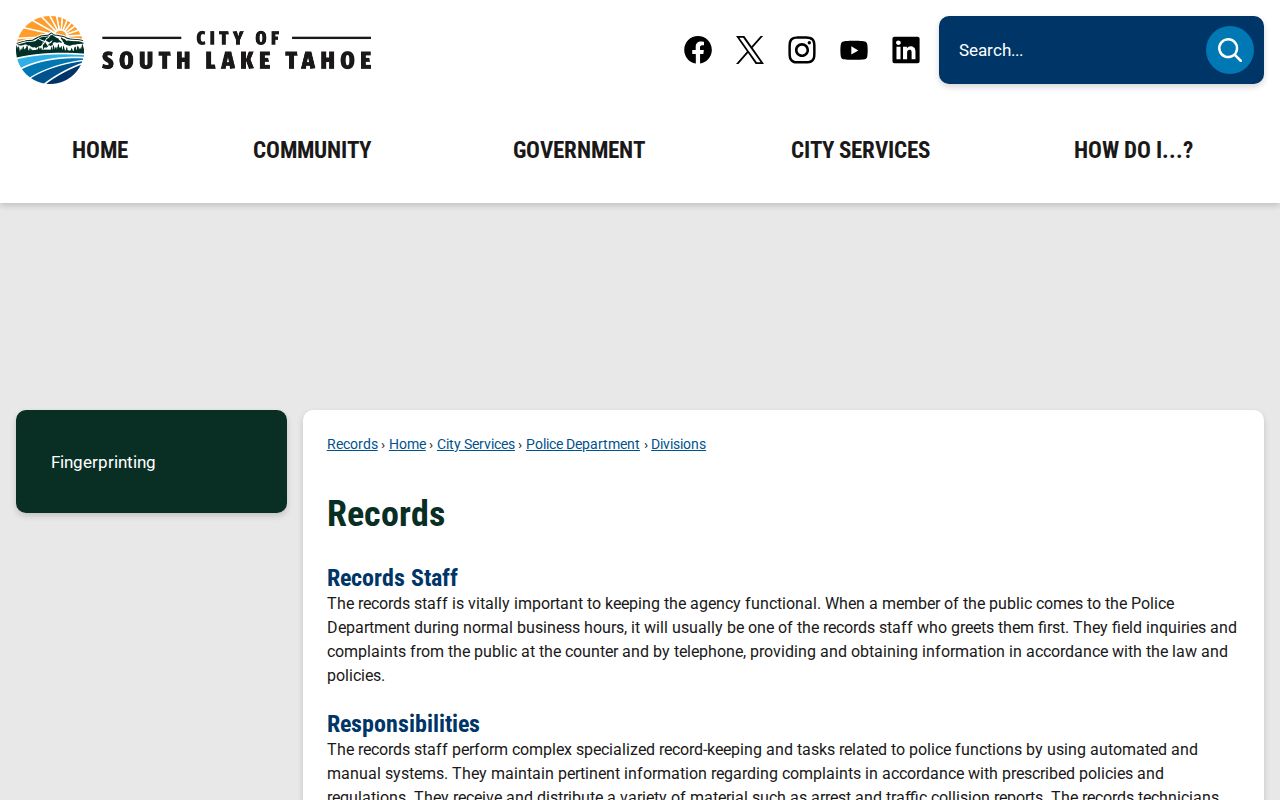
That office handles police files, while jail and court staff control their separate records.
Records at South Lake Tahoe Police
SLTPD records cover events its officers handled inside city jurisdiction. The department reports about 2,350 calls for service in a typical month, with marked increases during holiday weekends and peak tourist seasons. Those workload shifts help explain why a calls map can show bursts of activity that do not track the resident population alone.
The SLTPD police page identifies the department and its service context.
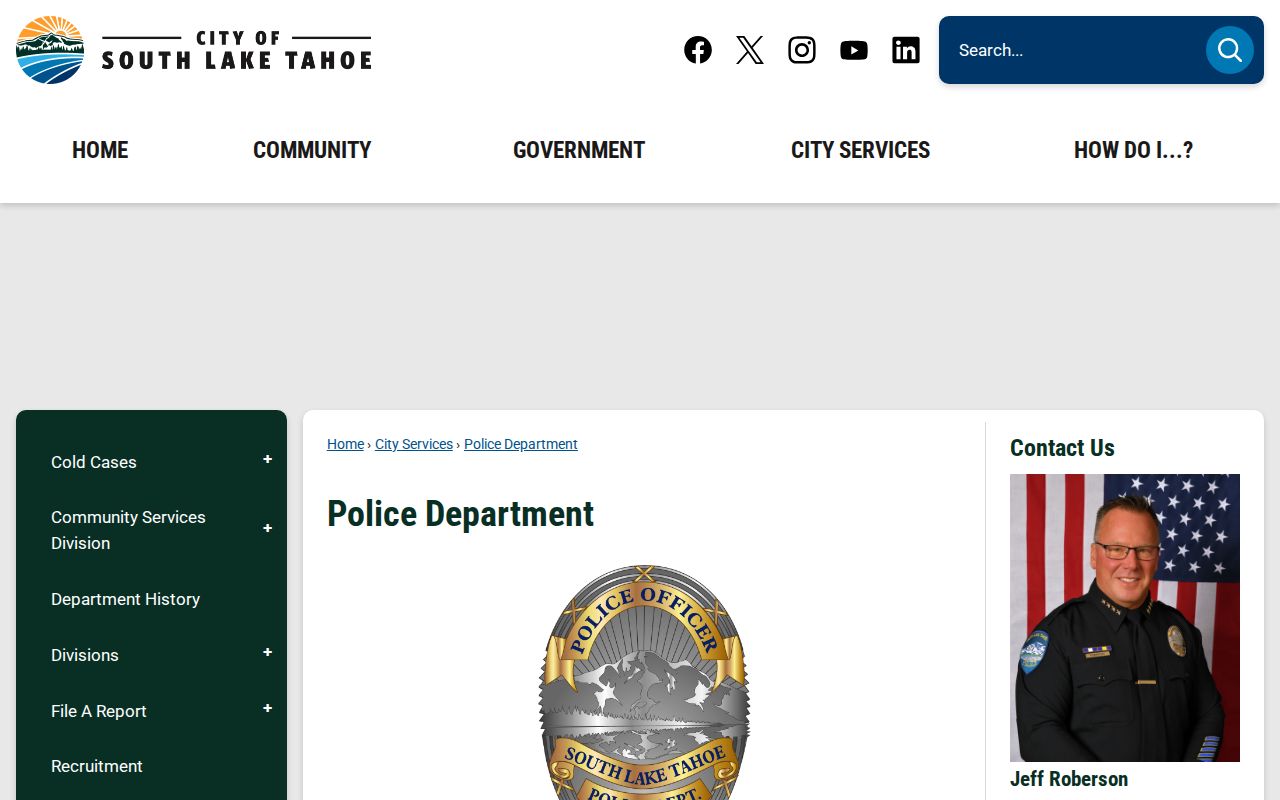
For a releasable report, contact Records rather than relying on a map entry as the complete file.
South Lake Tahoe Laserfiche Requests
The city's Laserfiche RecordRequest form is the online channel for identifiable city-held public records. The captured interface includes login and signature components. Describe the record, department, subject, and date range. Do not use it for a court file or a sheriff jail record because those belong to other custodians.
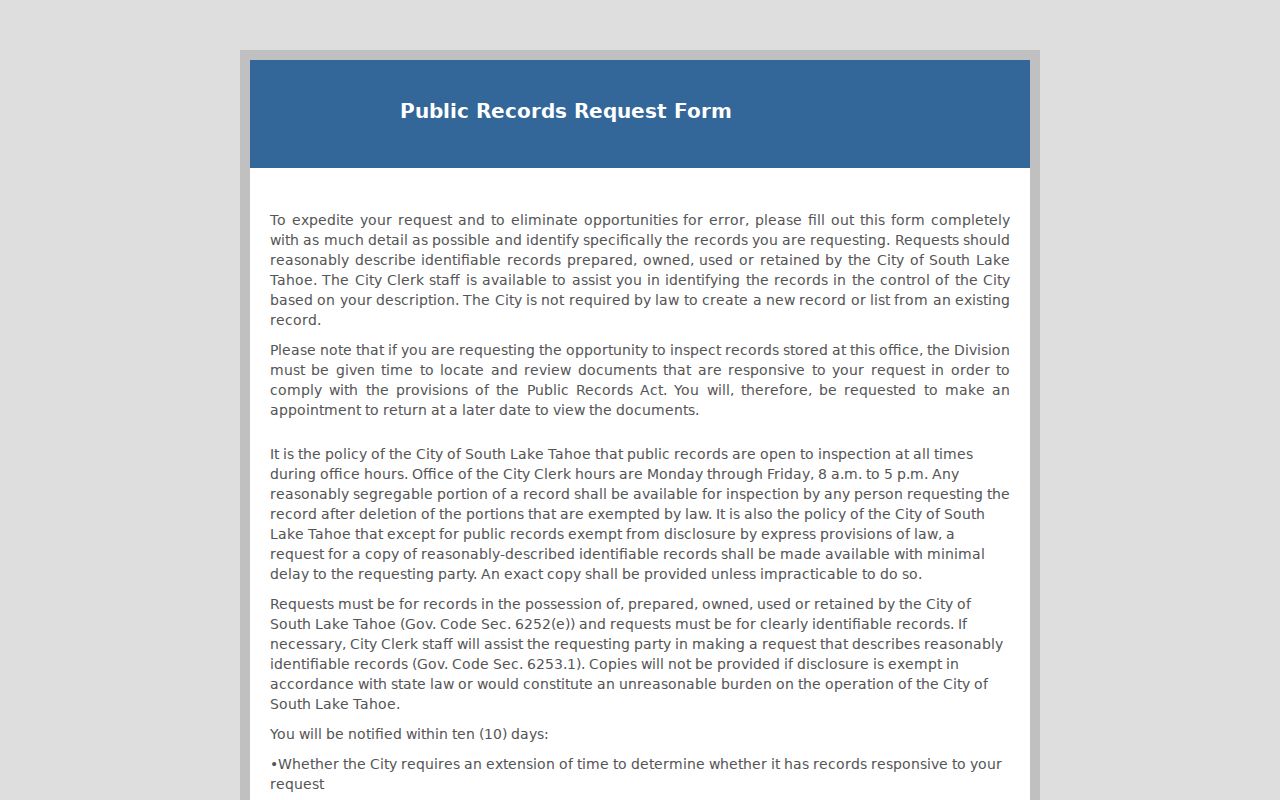
A focused request gives city staff a clear file to locate and review for exemptions or redactions.
Booking and Arrest Records in South Lake Tahoe
Booked arrestees may be held at South Lake Tahoe Jail, 1051 Al Tahoe Boulevard, phone 530-573-3030. County CitizenRIMS provides the public incarcerated-people roster. A roster entry can include booking identifiers, booking date, arresting agency, location, intake charges, bail, and current status. It is a custody snapshot, not a final criminal history.
An SLTPD arrest report stays with police. The jail creates the booking file, and the prosecutor may later file different charges in Superior Court. If the person no longer appears in custody, search the court portal and request the relevant police record. A missing live result does not prove there was no prior arrest.
South Lake Tahoe CitizenRIMS Map
The South Lake Tahoe CitizenRIMS map shows calls for service with dynamic date, location, and incident controls. It supports awareness of daily police activity and is not a name-based criminal-history database. A call can result in no arrest, and public map categories do not replace the underlying report.
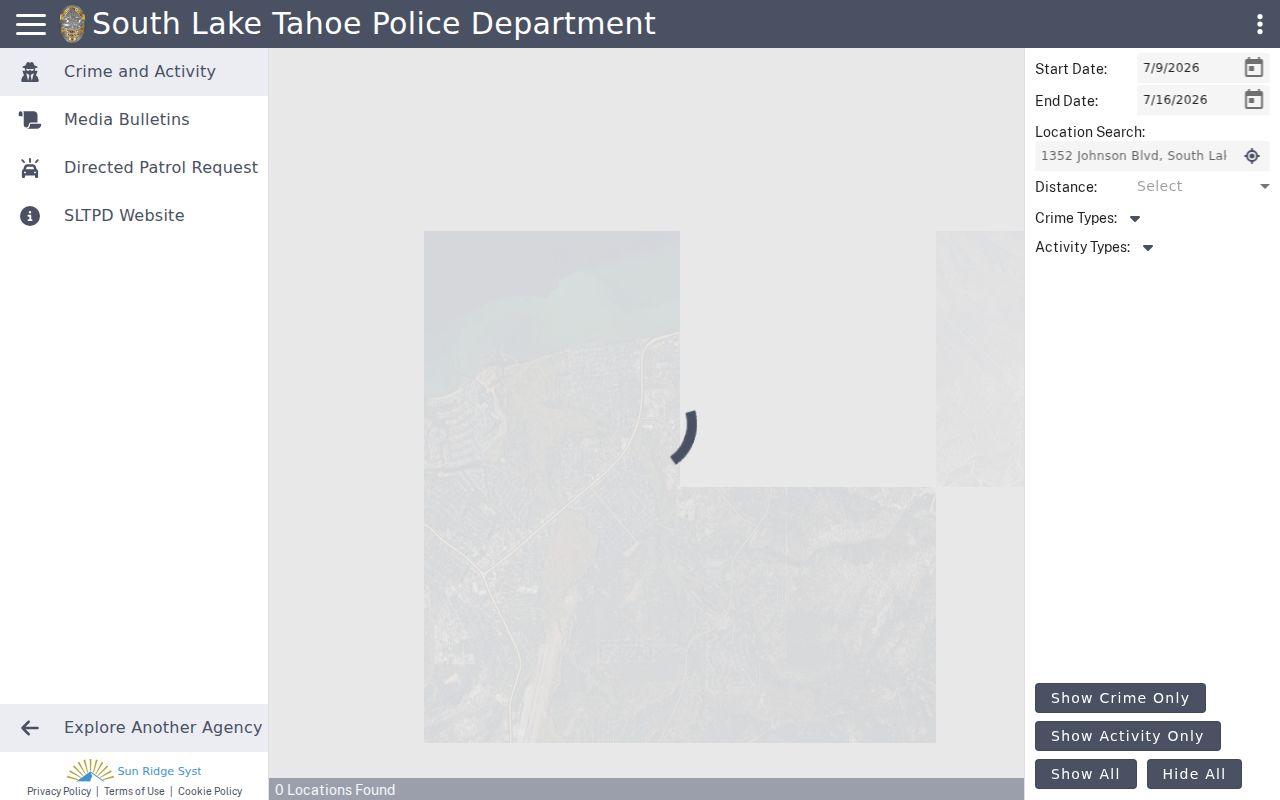
Use the map to identify an event, then ask Records for a releasable report when more detail is needed.
The South Lake Tahoe Court File
South Lake Tahoe does not use a separate municipal criminal court. Cases route to the Superior Court of California, County of El Dorado, South Lake Tahoe Branch at 1354 Johnson Boulevard, phone 530-573-3044. Department 3 handles criminal pretrial matters and trials as well as Domestic Violence Compliance Court. Search the county public portal, then use form M-55 for copies.
| Court | El Dorado Superior Court, South Lake Tahoe Branch. |
|---|---|
| Case types | Felonies, misdemeanors, infractions, and traffic matters. |
| Lookup | Public portal by name, case number, or filing date. |
| File contents | Charges, actions, hearings, pleas, outcomes, sentences, fines, and orders. |
| Copies | M-55 written or in-person request, with payment in advance. |
| Not provided | Police reports, arrest reports, transcripts, warrants, or confidential documents. |
South Lake Tahoe Branch Cases
Use a case number whenever possible. It can come from a citation, jail record, notice, or prior court paper. Name searches work when the number is unknown, but the defendant's date of birth helps the clerk distinguish people. Filing date and years to be searched narrow older requests. The Tahoe branch fax listed in the research is 530-542-9102.
Ask for the document that answers the question. The register of actions is an event list. The complaint or information shows filed charges. A disposition or plea shows the result, and a sentencing order shows the court's terms. M-55 also lists a Penal Code section 1203.4 dismissal order. That order can document qualifying post-conviction relief, though it does not erase every record for every purpose.
How South Lake Tahoe Records Reach the County
SLTPD creates the incident or arrest file. Jail staff create booking data when custody follows. Prosecutors decide what charges to file, and the Superior Court clerk keeps the case record. Fingerprints and dispositions may feed California DOJ, but each source remains distinct.
Record flow: South Lake Tahoe Police › South Lake Tahoe Jail and county prosecutor › El Dorado Superior Court › California Department of Justice
Recent activity may appear first with police or the jail. Filed allegations and final outcomes belong to court. A subject reviewing a statewide California record must use DOJ Live Scan. California has no public statewide name search for another person's rap sheet.
South Lake Tahoe BuyCrash Reports
SLTPD routes traffic-report purchases through its BuyCrash link. Use that channel for a collision report rather than sending a broad Laserfiche demand or searching the calls map. The vendor interface asks for crash-specific search details. Follow the link from the official police records material so the request reaches the channel selected by the city.
A traffic report is not a criminal-history report. It may document drivers, vehicles, location, statements, and an officer's crash investigation. Any citation or criminal charge follows a different path into the Superior Court file. Separate those questions before ordering a record.
South Lake Tahoe Data Transparency
The city Data and Transparency page connects residents with CitizenRIMS and extra-patrol request functions for vacation or traffic concerns.
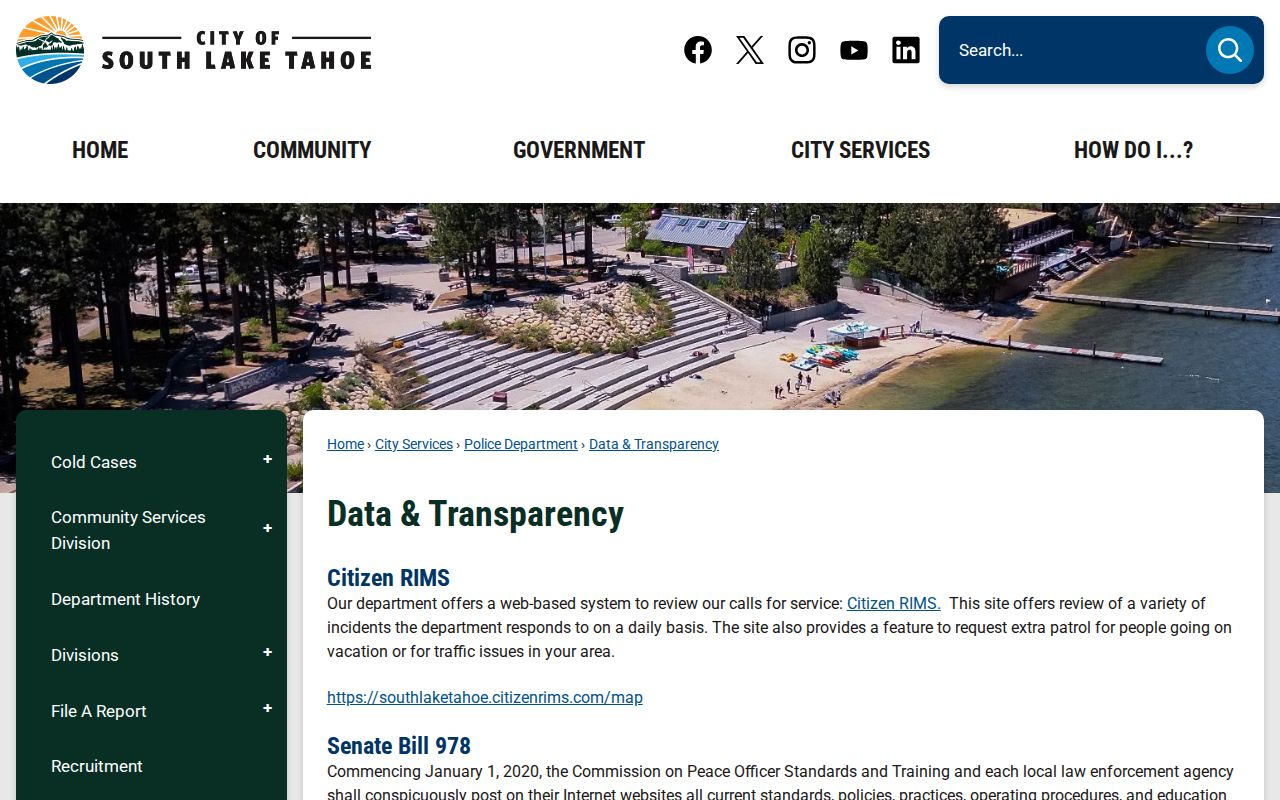
Those tools explain police activity and support service requests. They do not disclose every investigative detail or create a full criminal record.
South Lake Tahoe Record Access Rules
The California Public Records Act applies to identifiable non-exempt city records, but it does not turn every police file into an open document. Active investigation, juvenile, victim-sensitive, medical, and other protected content may be withheld or redacted. Court files follow court-access rules. DOJ state summary history is confidential under Penal Code section 11105 and is not a general public CPRA record.
Key Statutes:
Government Code section 7922.530 requires prompt access to identifiable non-exempt agency records.
Penal Code section 11105 restricts DOJ summary criminal history to the subject and authorized recipients.
California Rule of Court 2.400 provides general court-record access unless a record is sealed or confidential.
California Rule of Court 2.503 governs access to electronic court records and its limits.
South Lake Tahoe Record Types
A police incident report, booking record, court docket, and DOJ summary history can all refer to one event without containing the same facts. The police report records the response and investigation. Booking data records jail intake, including an arresting agency, booking number, date, alleged charges, bail, and custody status. The court file begins when charges are filed and adds hearings, motions, pleas, disposition, sentence, fines, and orders. DOJ compiles fingerprint-linked arrest and disposition information reported from agencies across California for the subject's record review.
These differences matter in South Lake Tahoe because the police station, jail, and court branch are close in place but separate in law. The Records Division cannot certify the court outcome. Jail staff do not control the police narrative. A calls-for-service dot does not prove an arrest. The court clerk cannot provide police or arrest reports, transcripts, warrants, or confidential documents through M-55. Start with the document that directly answers the question.
Common terms also mark the stage. An arrest is custody based on a warrant or probable cause and is not a conviction. Booking is intake. A complaint is a charging document, an arraignment is the first plea and advisement hearing, and a disposition is the result. A sentence follows conviction. Reading the label and date prevents an early allegation from being mistaken for the final case outcome.
South Lake Tahoe Seasonal Police Activity
The city reports an average of about 2,350 calls for service in a typical month, but holiday weekends and peak tourist seasons can raise the workload sharply. A map search over a busy weekend may therefore show more events than the same date range in a quieter month. That pattern reflects visitor volume and calls for service, not a direct measure of convictions or even arrests.
Use date and location controls to put CitizenRIMS results in context. Incident categories can help identify the type of response, but dynamic public-map data is a starting point. For a particular event, preserve the displayed date, place, and category, then contact Records with enough detail to locate the source report. The report may still be redacted or withheld under California law.
Extra-patrol requests on the transparency page serve a different purpose. They let residents ask police to pay attention to vacation or traffic concerns. They are service tools, not criminal-history searches. The My South Lake Tahoe app is likewise a general city-service channel, not a substitute for SLTPD Records, CitizenRIMS, the jail roster, or the court portal.
Correcting South Lake Tahoe Records
Send a correction to the custodian that created the disputed entry. An error in an SLTPD report belongs with police Records. A jail booking detail belongs with the Sheriff's custody system. A wrong docket entry or missing disposition should be raised with the Superior Court clerk, supported by the filed order or other case document. A problem in the subject's California summary history follows the DOJ fingerprint record-review and challenge route.
Keep the case number, booking number, police report number, and Live Scan transaction information separate. Each identifies a different record. Include a copy of the source document that shows the correct fact when the process permits it. A court dismissal under Penal Code section 1203.4 can be requested through M-55, but dismissal does not mean every police or booking reference vanishes. Arrest sealing under Penal Code section 851.91 is a distinct form of relief for qualifying arrests that did not result in conviction.
Do not send one broad correction request to every agency. South Lake Tahoe's systems exchange some arrest and disposition information, yet no office owns all copies. Fixing the source first gives downstream custodians a reliable order or amended record to review. Confirm the change in each relevant system after the responsible office acts.
When the portal does not show a recent result, allow for processing time and check the agency record that comes first in the sequence. A police report can predate booking, and booking can predate a filed complaint. Older files may require clerk research rather than a quick online result. Write down when and where each search was run. That small log helps show whether two results conflict or simply reflect different stages of the same South Lake Tahoe matter.