
El Dorado County Sex Offender Checks
The California Megan's Law Website is the primary public channel for an El Dorado County sex offender lookup. The California Department of Justice manages it under Penal Code section 290.46. Searchers may start with a person's name or with a place such as a city, ZIP code, county, address, or map radius. A location search is useful for community awareness, while a name search is more useful when the identity is already known. The required disclaimer must be accepted before results appear.
Local offices serve a different role. The El Dorado County Sheriff handles registration in sheriff jurisdiction and receives reports of suspected noncompliance. Placerville Police and South Lake Tahoe Police serve residents within those cities. These agencies do not replace the state public registry with a separate full county list. Bring a specific name, location, or conduct concern when contacting them. If the concern spans California's border, the national portal adds a second search channel.
El Dorado Registry Disclosure Limits
A missing public profile does not prove that a person has no registration duty. California DOJ states that Megan's Law displays only registrants and fields authorized for public disclosure. Some registered people are not shown at all. For others, the website may show a community or ZIP code instead of a street address. The controlling offense and disclosure category matter.
This limit protects information the statute excludes. Victim identities do not appear. Employer names and addresses are also excluded. The profile's criminal-history section is confined to registrable offenses rather than serving as a full criminal record. Use the Superior Court channel for public case history, and use DOJ fingerprint record review only for your own state summary criminal history.
California Megan's Law Searches
California DOJ's registry supports several paths into El Dorado County results. Exact names help narrow identity searches. Place filters are better for a neighborhood check. Because address-level disclosure varies by legal category, a broad city, ZIP, county, or radius search can reveal a profile that a street-only assumption might miss. Follow these steps:
- Open California Megan's Law and read and accept its use conditions.
- Choose a name search or enter an address, city, ZIP code, county, or map location.
- Set a radius when the interface offers one, then submit the search.
- Compare the profile photo, aliases, physical details, offense, and disclosed location before drawing conclusions.
| Field Label | Type | Required | Notes |
|---|---|---|---|
| Name | Text | No, if using location | Search by a registrant's name. |
| Address or location | Text or map | No, if using name | Starts a proximity or community search. |
| City or ZIP | Text or selection | Optional | Use El Dorado County communities or a known ZIP. |
| County | Selection or map | Optional | Choose El Dorado County for a county-wide view. |
| Radius | Distance selection | Optional | Available distances can vary with the live interface. |
| Disclaimer | Acknowledgement | When prompted | Accept lawful-use conditions before results. |
El Dorado Registry Search Screens
The official sources show the difference between a public search interface and the program rules behind it. The California DOJ Megan's Law program page explains the disclosure system.
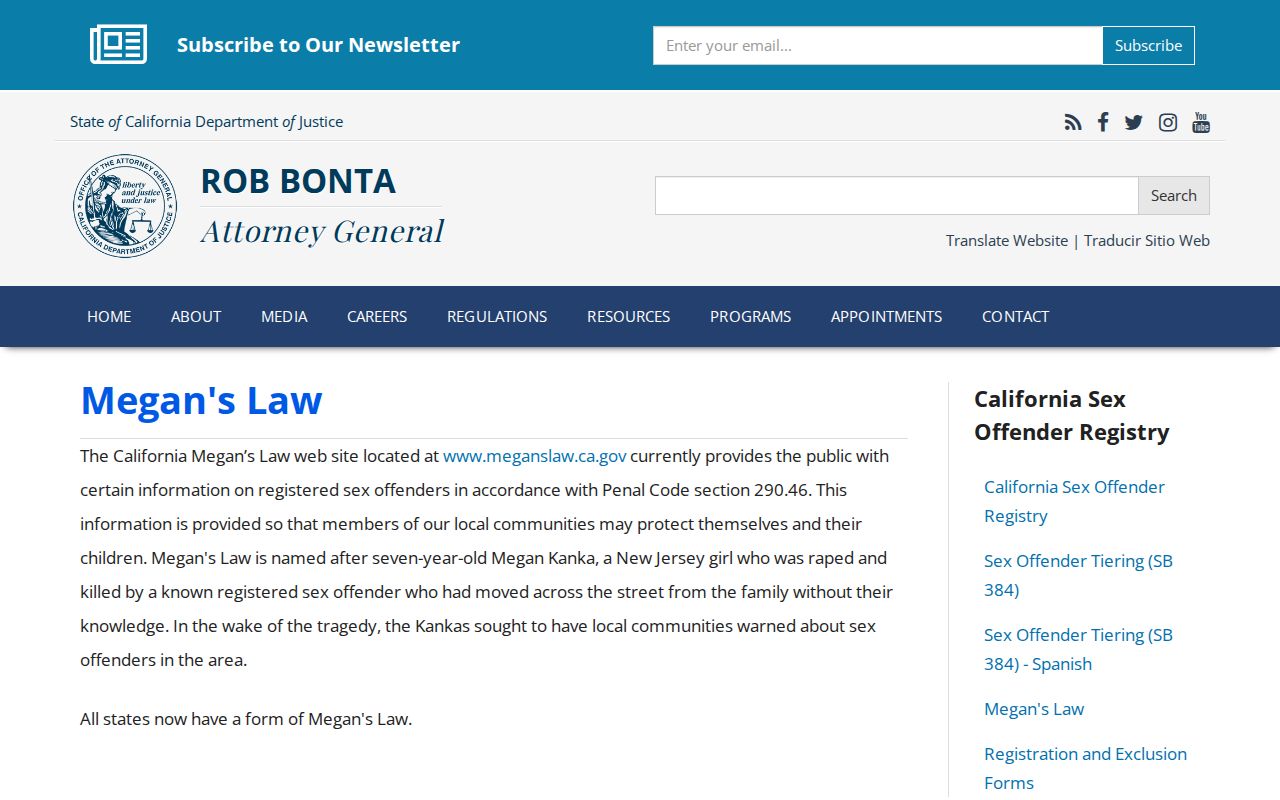
That program page is the best place to read why some data appears and other data remains confidential. The California Megan's Law search is where the public enters a name or location.
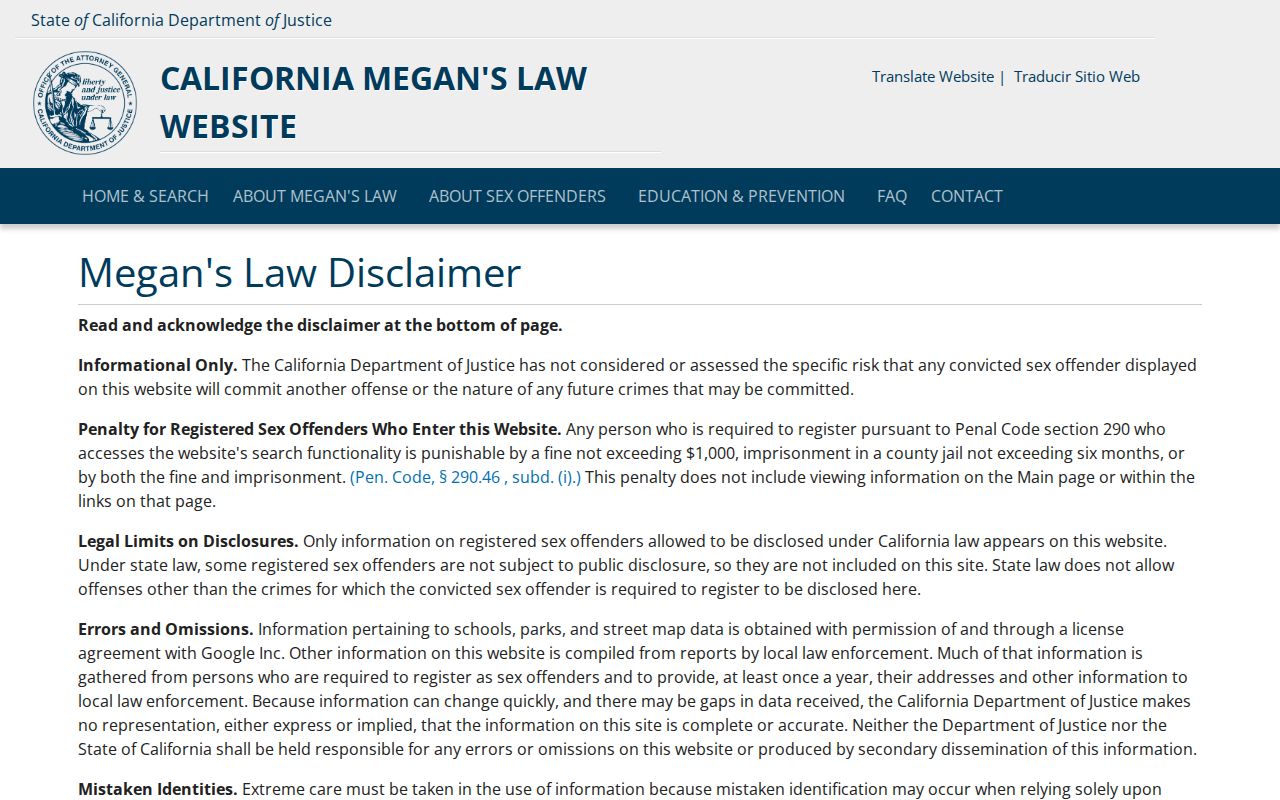
Read the conditions before searching. The result is a statutory public disclosure, not an unrestricted criminal-history report.
El Dorado Registry Profiles: What They Show
A public profile gives enough detail to distinguish people and understand the registrable offense, subject to California's release rules. Fields vary by profile. Address granularity may be a full address, a community, or a ZIP code. Risk and status data appear only when public and available. Review several identifiers together rather than relying on a name alone.
| Name and aliases | Published identity and known alternate names. |
|---|---|
| Photo and description | Photo where public, plus age or birth data, gender, race, height, weight, hair, and eyes when shown. |
| Disclosed location | Street address, community, or ZIP-level information as Penal Code 290.46 permits. |
| Registrable offense | The offense requiring registration and related conviction or release year where available. |
| Risk and marks | Public SARATSO or static risk level, scars, marks, tattoos, or other fields when legally released. |
| Status | Registration or compliance information when the live profile displays it. |
| Excluded fields | Victim identities and employer name or address are not published. |
NSOPW Beyond El Dorado County
The Dru Sjodin National Sex Offender Public Website provides a cross-state search by name or location. It is useful when a move, travel pattern, or unknown state makes a California-only query too narrow. NSOPW sends users back to participating jurisdictions for the source details, so the state record remains the key profile.
The national interface is a search layer, not a new local registration office. Its official landing page shows the national entry point.
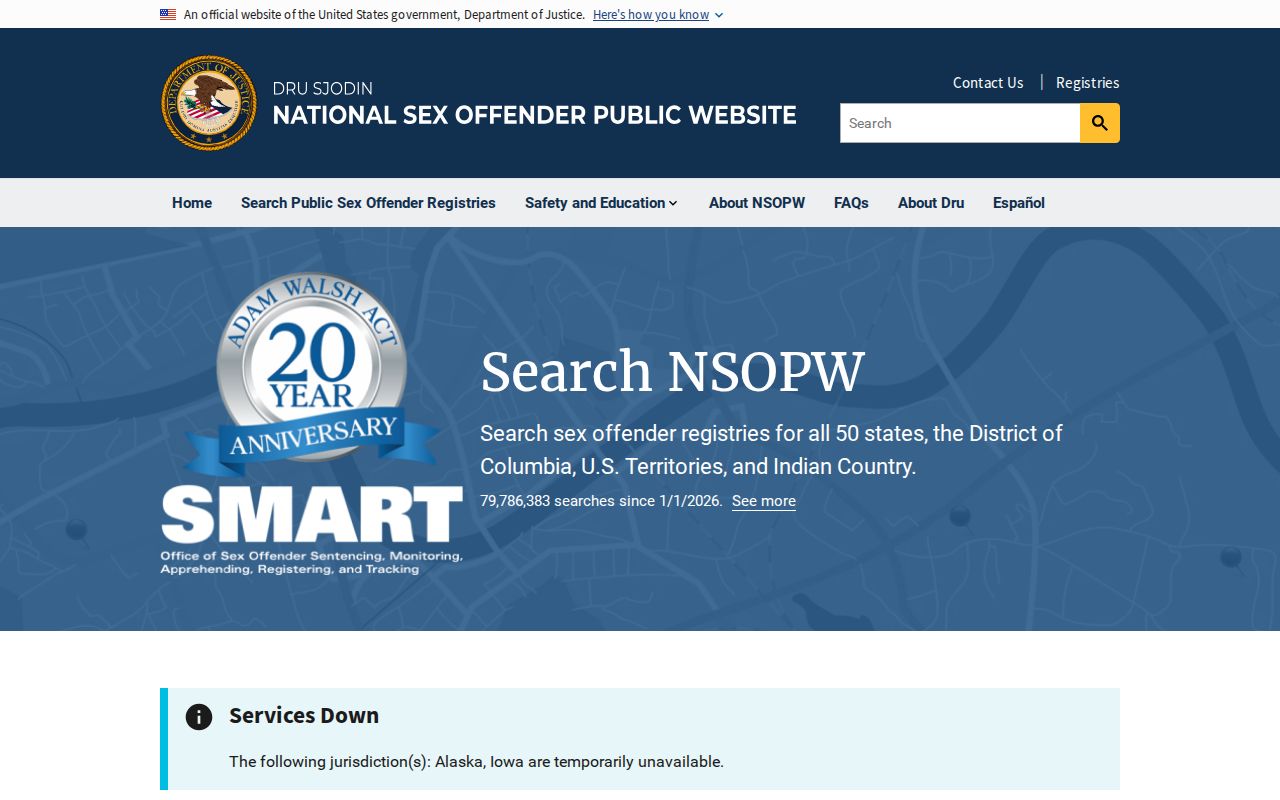
Compare the jurisdiction source and update context before relying on a match. Use California Megan's Law for the authoritative public California disclosure.
Registration Levels and Duties in California
California assigns three general registration tiers. The tier sets the usual registration duration, but it does not by itself dictate every item the public sees. Penal Code section 290.46 disclosure categories and the specific offense control public visibility. Verification frequency was not stated in the project research, so it should be confirmed with the registering law-enforcement agency rather than inferred from tier length.
| Tier | General duration | Public visibility |
|---|---|---|
| Tier 1 | 10 years | Display depends on the statutory disclosure category. |
| Tier 2 | 20 years | Some profiles disclose a community or ZIP rather than a full address. |
| Tier 3 | Life | Generally falls within broader disclosure categories, subject to the offense. |
Reporting El Dorado Registration Concerns
Report suspected noncompliance to the agency with jurisdiction. For unincorporated areas such as El Dorado Hills, contact the El Dorado County Sheriff. The Placerville office is at 200 Industrial Drive and can be reached at 530-621-5655. The South Lake Tahoe sheriff office is at 1360 Johnson Boulevard, Suite 100, at 530-573-3000.
Within incorporated cities, Placerville Police is at 730 Main Street, 530-642-5210, and South Lake Tahoe Police is at 1352 Johnson Boulevard, 530-542-6100. Share facts, not conclusions: the name, location, date, and conduct that caused concern. For an urgent threat, use emergency services. Registry viewers should not approach, follow, threaten, or publish claims about a listed person.
Using El Dorado Registry Information Lawfully
Registry information is provided for protection of a person at risk. It supports family safety plans and community awareness, but it does not authorize harassment, threats, vigilantism, or discrimination. Confirm that identifiers match and remember that a displayed address can be limited by the person's disclosure category. Contact law enforcement about a concrete safety or compliance concern.
Misuse is punishable: California Penal Code section 290.46 limits registry use to protecting a person at risk. Misuse connected to a misdemeanor can add a $10,000 to $50,000 fine; misuse connected to a felony can add a consecutive five-year prison term, and unlawful use may also create civil liability.
El Dorado County Location Searches
A place-based registry search works best when the location matches the safety question. A county filter gives a wide view but can produce more results than a neighborhood check. City and ZIP fields narrow the area. An address and radius can focus on the blocks around a home, school route, park, or regular family destination. The live interface controls the offered distances, so select from its current choices rather than assuming a fixed radius.
El Dorado County includes incorporated cities and large unincorporated communities. El Dorado Hills has no city police department, but it can still be searched by city, ZIP, county, or map location in Megan's Law. Local registration jurisdiction affects which agency receives a noncompliance report; it does not require a separate registry. Placerville and South Lake Tahoe concerns can go to their police departments, while unincorporated-area concerns go to the Sheriff.
Location results may not disclose a full street address. Some tier-two registrants appear at community or ZIP level under Penal Code section 290.46(c), and other disclosure limits depend on the offense. Search the surrounding area and review the profile's stated location level. Never infer an exact home from a broad community marker.
Matching El Dorado Registry Profiles
A name match alone is weak evidence. Compare the photograph, aliases, age or date-of-birth information, height, weight, hair, eyes, and other public physical details. Review the disclosed location and the registrable offense. Scars, marks, tattoos, risk information, conviction year, or registration status may add context when the profile legally displays them. Not every field appears for every person.
Profiles are limited to public registry facts. They do not display victim information. They exclude employer name and address, and they do not provide a complete account of non-registrable criminal history. For a public court case, search El Dorado Superior Court. For your own complete California summary history, request a fingerprint-based DOJ review. Those channels answer different questions and have different access rules.
If a profile appears stale or the person seems to be living somewhere other than the disclosed location, do not investigate by confrontation. Record the objective facts and contact the law-enforcement agency with jurisdiction. A registration officer can assess compliance using information that is not available to the public.
El Dorado Tiers Versus Visibility
Registration duration and public display are related but distinct. Tier 1 has a general ten-year duration, Tier 2 has a general twenty-year duration, and Tier 3 generally lasts for life. Yet the tier label alone does not tell a searcher whether a full address, community, ZIP, or no public profile will appear. Penal Code section 290.46 and the specific registrable offense control disclosure.
This difference prevents two common errors. First, a person can have a registration obligation without appearing in a public name search. Second, a community-level result does not mean the registry lacks location information; it means the public view is limited. Treat the website as the disclosure California law authorizes, not as the complete law-enforcement registry.
Registration duties and any process for ending them depend on current law and the person's case. The project research provides the general tier durations but not an El Dorado verification schedule. Direct a registrant's duty question to the proper sheriff or city registration office. Public users should rely on the live profile and DOJ program material for disclosed facts.